Sellers tend to think of the buyer universe as large and unknowable until a banker reveals it. In most sub-sectors it is neither. The same names recur as acquirers, deal after deal, and they are visible to anyone willing to count.
Counted across our universe, the most active acquirers are platform consolidators running deliberate roll-ups: RadNet in imaging and Skylight Health in primary care at nine deals each, Quipt in home medical equipment at eight, American Dental at seven, and a cluster — ZenaTech, CRH Medical, CareMax — at six. In construction-adjacent trades, Comfort Systems USA recurs. These are not opportunistic buyers. They are programmatic ones, and a programmatic buyer has a known appetite.
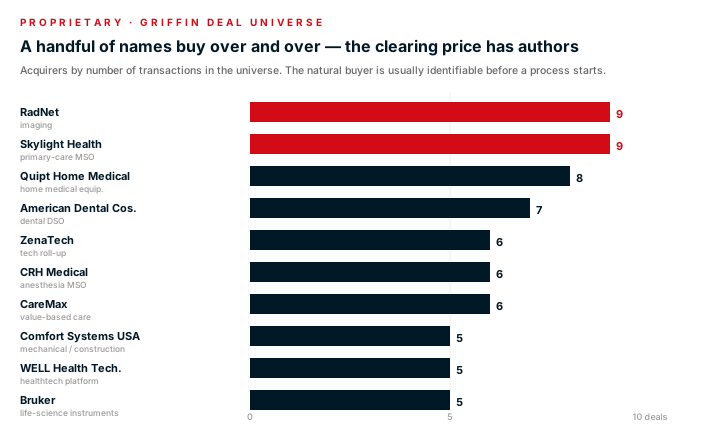
Knowing who the repeat consolidators are changes how a business is prepared, not just who receives the book. A programmatic acquirer underwrites against a template — it knows what it pays, what it integrates, and what it discounts. A seller who can name the two or three platforms most likely to compete for their asset can structure differentiation toward what those specific buyers credit, and away from what they ignore.
That is the difference between entering a process hoping for a buyer and entering it knowing who sets the clearing price. The clearing price has authors. They are countable in advance.
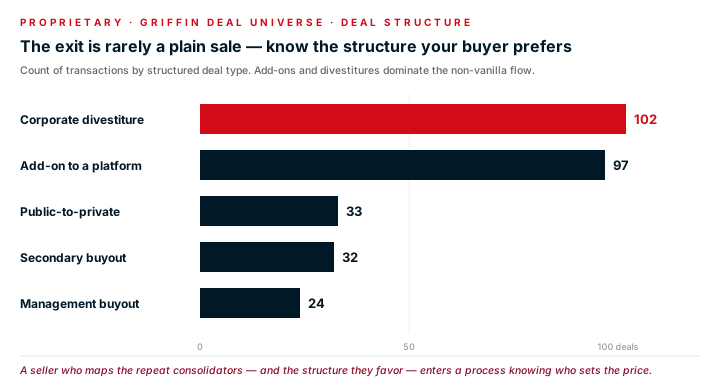
The other half of the map is structure. Across the universe, the non-vanilla deal flow is dominated by corporate divestitures (102) and add-ons to existing platforms (97), with public-to-private (33), secondary buyouts (32), and management buyouts (24) behind them. The single largest structured category is a parent shedding a unit; the second is a platform bolting on a tuck-in.
For a seller, the structure the likely buyer prefers is as informative as the buyer's identity. An add-on to a platform is priced, diligenced, and integrated differently from a standalone strategic acquisition or a sponsor's new-platform purchase. Mapping the buyer and the structure together — before going to market — is the substance of an acquirer assessment, and it is the work that most rewards being done early.