A founder selling a profitable, well-run highway-construction business often arrives at the table with a number borrowed from somewhere else — a healthcare multiple a friend received, a technology multiple from the press. The gap between that number and the offer can feel like a failure of the process. The data says it is structural, and naming it as structural is the first useful thing an advisor can do.
Across our deal universe, the construction, aggregate and paving cohort trades at a median 5.7x EBITDA. Healthcare, across 265 disclosed deals, sits at 12.4x. Broad B2B services land in between at 8.0x. A paving company and a clinic of the same EBITDA are not in the same valuation conversation, and no amount of process closes a gap that the cohort itself sets.
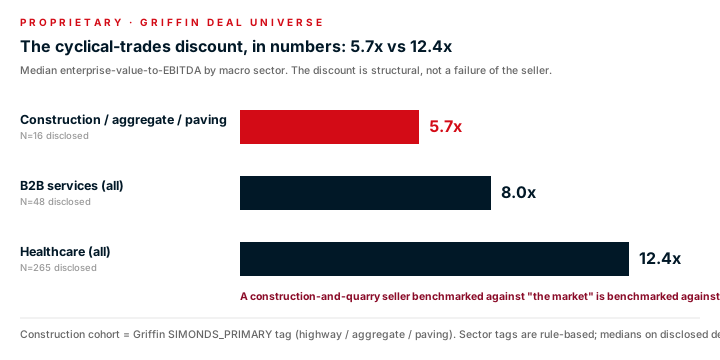
The discount is a rational read of the cash flows. Highway and heavy-civil revenue is backlog-driven and tied to public infrastructure cycles; margins move with asphalt and fuel input costs; and the work is, by its nature, project-based rather than recurring. A buyer underwriting those flows applies a lower multiple because the forward stream is more variable and less annuity-like than a healthcare services book. That is not prejudice against the trade. It is the trade.
Which is why the seller's leverage does not come from arguing the cohort multiple upward. It comes from changing which cohort the business belongs to.
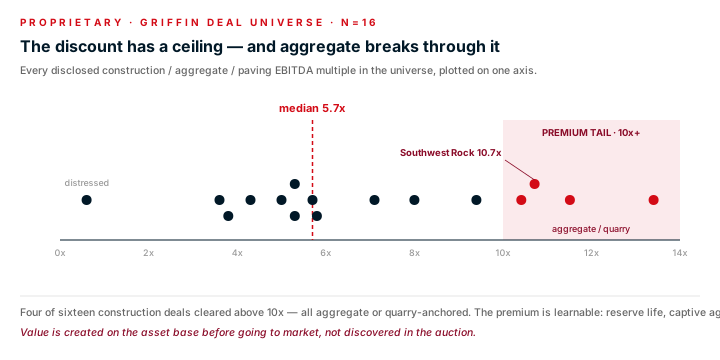
Plot every disclosed construction multiple in the universe on one axis and the cluster sits between 4x and 8x around the 5.7x median — with a distinct premium tail above 10x. Every deal in that tail is aggregate or quarry-anchored. Southwest Rock Products cleared 10.7x. The pattern is consistent: the moment a construction platform owns the rock, it stops being priced as a contractor and starts being priced as a materials business.
That is the actionable seam. The aggregate premium is not luck; it is reserve life, captive-customer economics, and route density — characteristics that are visible in diligence and, more to the point, buildable before a process begins. A seller who can move EBITDA from the contractor line to the owned-aggregate line is not negotiating a better multiple. They are qualifying for a different one. Value of this kind is created on the asset base ahead of going to market, not discovered in the auction.